Innovation is the fourth dimension of process development

In construction supply chain management, we have worked with three dimensions of process development. Deviation-driven, challenge-driven, and risk-driven development. The idea has been that by working with minor steps with standard work, management by objectives and risk management, we get a continuous improvement of the process. This has also been referred to as Kaizen. Sometimes we see small and large leaps in process development. We can call these innovations. By effective management, these innovations can contribute to process development, not just in construction supply chain management, but in processes in general. This is my next paper.

Deviation driven development is perhaps the most common way to start working with flow optimization of the construction supply chain. That is, we describe standardized work methods and when something deviates from the standard, we get a chance to evaluate and improve the process. Often by using PDCA.

Challenge driven process development is based on target states and how we try to achieve a future state for the process. The way to do this is to either adjust the standard or the narrow the process variance. By challenging the supply chain and adopt to customer requirements or increased effectiveness we develop the process. An important part of this is to experiment.

Risk driven development is based on risk analysis and external monitoring. By utilizing different supply chain scenarios, we try to investigate the future and predict things that can go wrong. By categorizing, evaluating, and developing actions for risks, we develop the process before the deviation has occurred. A powerful tool has been to work with A3’s.

Innovation driven development, perhaps also called Kaikaku, involves pushing process development through fundamentally new ways of working, new management methods, digitization, and automation. However, it is difficult to draw the line for what exactly is an innovation. Therefore, innovation is both a part of deviation-driven, challenge-driven and risk-driven development, but it is also a part that is entirely new ways of thinking.

How do you develop your processes?
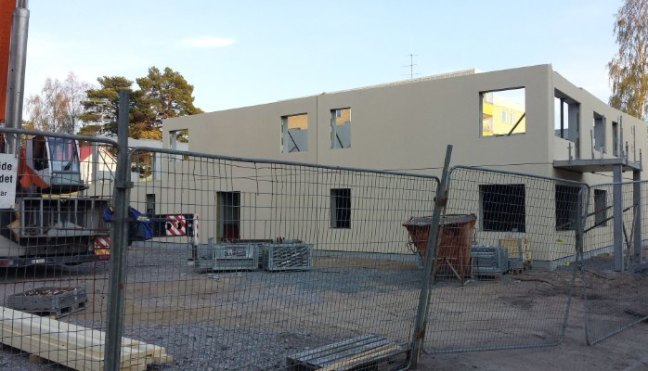
The return of the construction Supply Chain Management

It has been shown in several studies that a possible way of increasing efficiency in construction is to work with modern methods of planning, execution and control the supply chain. However it seems that the construction companies in Sweden show moderate interest in construction supply chain management (cSCM). How come?

In the research group I’m associated with (read more here) we have stated that the core of construction is to provide a service to the client. It is about selling hours and materials. If it is only about selling time and material with a reasonable surcharge; what is then the competitive advantage on a mature market?

The contractor has to both have the lowest bid in the tendering phase but also be able to increase the project efficiency after been awarded the contract. The contractor has to be able to handle cash flow better than its competitors, where the actual profit will be the slack between billing and the actual completion. The contractor has also have to have a strategic procurement capability to purchase and manage contracts with subcontractors or suppliers to a lower cost than calculated.

These approaches should be a driving force towards:

  • Flow utilization, where throughput is prioritized over resource utilization
  • Management of temporary and flexible supply chains
  • Dynamic planning
  • Innovation of methods and materials that increase efficiency

cSCM can contribute to all these elements, but has received little or no attention within the construction sector in Sweden the last twenty years. Lately however I have received some increased number of questions regarding cSCM. My interpretation is that one of the reasons is that house building demand is increasing to levels that are well above total national capacity and the contractors need a strategic approaches such as cSCM in order to be able to pull projects off. Another is that there has also been some breakthroughs by international competitors of size and there is an urgent need to increase the competitive advantage.

House-building in Sweden was one of the sectors that was driving the research and development of planning, execution and control of the supply chain during the sixties. Perhaps we are heading back there – first we need to catch up.

This text has been published January 3rd 2016 in Swedish on my blogg.